
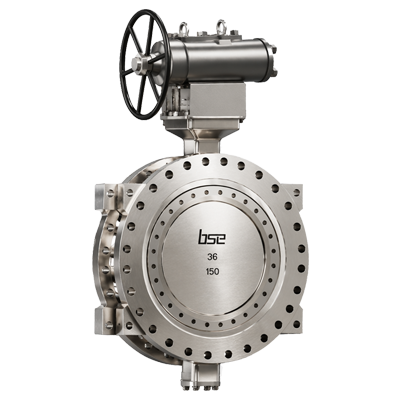
A butterfly valve is a type of flow control device widely used in pipelines for regulating or isolating fluid flow. Its design is simple, compact, and efficient. Here are its key features:
Simple and Compact Design :Butterfly valves have fewer components compared to other valves, making them lightweight and easy to install, especially in tight spaces.
Quarter-Turn Operation :They operate with a 90° rotation of the disc, allowing for quick opening and closing.
Fast Operation :Because of the quarter-turn mechanism, they can open or close rapidly, which is useful in systems requiring quick shut-off.
Low Cost :They are generally more economical than other valve types like gate or globe valves due to their simple construction.
Low Pressure Drop :When fully open, the disc offers minimal resistance to flow, resulting in relatively low pressure loss.
Versatile Applications :Used in a wide range of industries such as water supply, wastewater treatment, oil & gas, chemical processing, and HVAC systems.
Good Flow Control :They can be used not only for on/off service but also for throttling (flow regulation).
Variety of Materials :Available in different materials (cast iron, stainless steel, plastic, etc.) to handle various fluids and environmental conditions.
Tight Sealing Options :Modern designs offer excellent sealing capabilities, including bubble-tight shutoff in some cases.
Easy Maintenance :Due to fewer moving parts, maintenance and repairs are relatively simple and cost-effective.
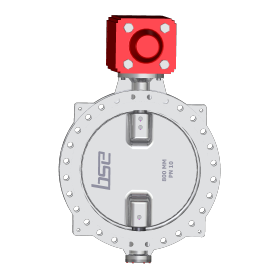
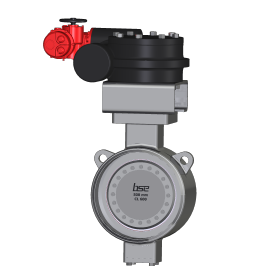
The outer casing that holds all internal parts.
Fits between pipe flanges (wafer, lug, or flanged type).
Made from materials like cast iron, ductile iron, or stainless steel.
The central rotating element that controls flow.
Mounted on a shaft and positioned in the flow path.
Rotates 90° to open or close the valve.
Connects the disc to the actuator or handle.
Transfers rotational motion to the disc.
Designed to withstand torque and pressure loads.
Provides sealing between the disc and valve body.
Can be soft (rubber, PTFE) or metal.
Ensures leak-tight closure.
Used to operate the valve (manual lever, gear, pneumatic, or electric actuator).
Controls the rotation of the stem and disc.
SABSE Valves is known for its extensive manufacturing range; we produce a large number of valves in almost every size and material. If you don't find the valve you need in the enclosed catalog, please contact our sales representatives, and we will explore the feasibility of producing it in other dimensions.
| SIZE | CONSTRUCTION | EXTREMES | CLASS | STANDARD |
| 2" - 24" | WAFER | RF (FLANGED) | 150 - 300 | API 609 / ASME B16.34 |
| 2" - 24" | LUG | RF (FLANGED) | 150 - 300 | API 609 / ASME B16.34 |
| 4" - 36" | DOUBLE FLANGED | RF | 150 - 600 | API 609 / ASME B16.34 |

API 599 Metal Plug Valves: Flanged, Threaded, and Welded Ends.
API-6D ISO 14313:1999: Oil and Natural Gas Industries, Pipeline Transportation Systems, Pipeline Valves.
API 598: Inspection and testing of API 598 valves.
Flanges and flanged fittings ASME B16.5.
Butt weld ends ASME B16.25.
Face-to-face and end-to-end dimensions of valves according to ASME B16.10.
* Other standards/materials available upon request.