
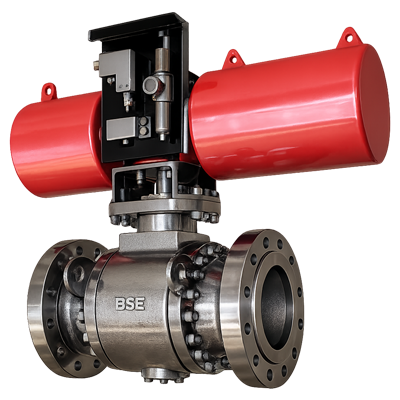
Ball valves are widely used in industrial flow control applications due to their durability, reliability, and quick operation. Below are the key features:
Quick Quarter-Turn Operation :Opens and closes with 90° rotation for fast control
Tight Shut-Off : Provides bubble-tight sealing, minimizing leakage
Low Pressure Drop : Full bore design allows smooth flow with minimal resistance
Durable Construction : Made from robust materials for long service life in harsh conditions
High Pressure & Temperature Handling : Suitable for demanding industrial applications
Bi-Directional Flow : Can control flow in both directions
Low Maintenance : Simple design reduces wear and maintenance requirements
Versatile Application : Used in oil & gas, chemical, water treatment, and process industries
Corrosion Resistance Options : Available in stainless steel, carbon steel, and alloy materials
Easy Automation : Can be easily fitted with pneumatic or electric actuators
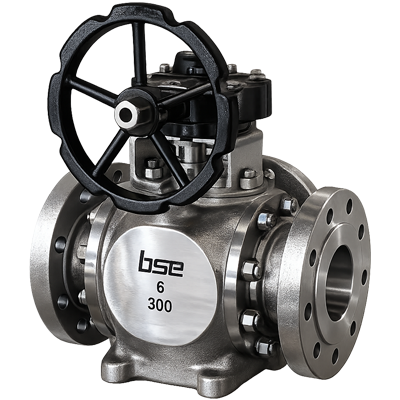
A ball valve is a quarter-turn valve designed with a spherical ball having a central bore (hole). The main components include:
Body : Outer casing that holds all internal parts (available in two-piece, three-piece, or flanged design)
Ball (Spherical Disc) : Rotating element with a hole through the center for flow control
Stem : Connects actuator/handle to the ball for rotation
Seats (Seals) : Usually PTFE or reinforced material that ensures tight sealing
Handle / Actuator : Used for manual or automatic operation
End Connections : Threaded, flanged, or welded depending on application
On/Off Flow Control : Starts or stops fluid flow quickly
Flow Isolation : Provides complete sealing when closed
Flow Direction Control : Can be used in multi-port designs (2-way, 3-way)
Pressure Regulation Support : Helps maintain system efficiency in pipelines
Emergency Shut-off : Quickly stops flow in critical systems
Minimal Pressure Loss : Full bore design allows smooth flow when open
Automation Compatibility : Can be operated using pneumatic or electric actuators
SABSE Valves is known for its extensive manufacturing range; we produce a large number of valves in almost every size and material. If you don't find the valve you need in the enclosed catalog, please contact our sales representatives, and we will explore the feasibility of producing it in other dimensions.
| SIZE | CONSTRUCTION | EXTREMES | CLASS | STANDARD |
| 2" - 24" | TOP ENTRY | RF - RTJ - BW | 150 - 300 - 600 | API 6D - ASME B16.34 |
| 2" - 16" | TOP ENTRY | RF - RTJ - BW | 900 - 1500 | API 6D - ASME B16.34 |
| 2" - 10" | TOP ENTRY | RF - RTJ - BW | 2500 | API 6D - ASME B16.34 |

API 599 Metal Plug Valves: Flanged, Threaded, and Welded Ends.
API-6D ISO 14313:1999: Oil and Natural Gas Industries, Pipeline Transportation Systems, Pipeline Valves.
API 598: Inspection and testing of API 598 valves.
Flanges and flanged fittings ASME B16.5.
Butt weld ends ASME B16.25.
Face-to-face and end-to-end dimensions of valves according to ASME B16.10.
* Other standards/materials available upon request.